The Stanford 2026 AI Index dropped its most important finding last week: the gap between AI experts and everyone else has become a chasm. 73% of experts think AI will help jobs. Only 23% of the public agrees. This isn’t a communication problem. It’s a values problem. And nobody in the industry wants to admit it.
Let me tell you what happened the week the Stanford AI Index came out.
The report dropped on April 13, 2026, documenting a 50-percentage-point gap between how AI experts view AI’s impact on jobs and how the general public views it. It documented falling Gen Z excitement — down from 36% to 22% in a single year — and rising Gen Z anger — up from 22% to 31%. It noted that the US has the lowest public trust in its own government to regulate AI of any country surveyed, at just 31%.
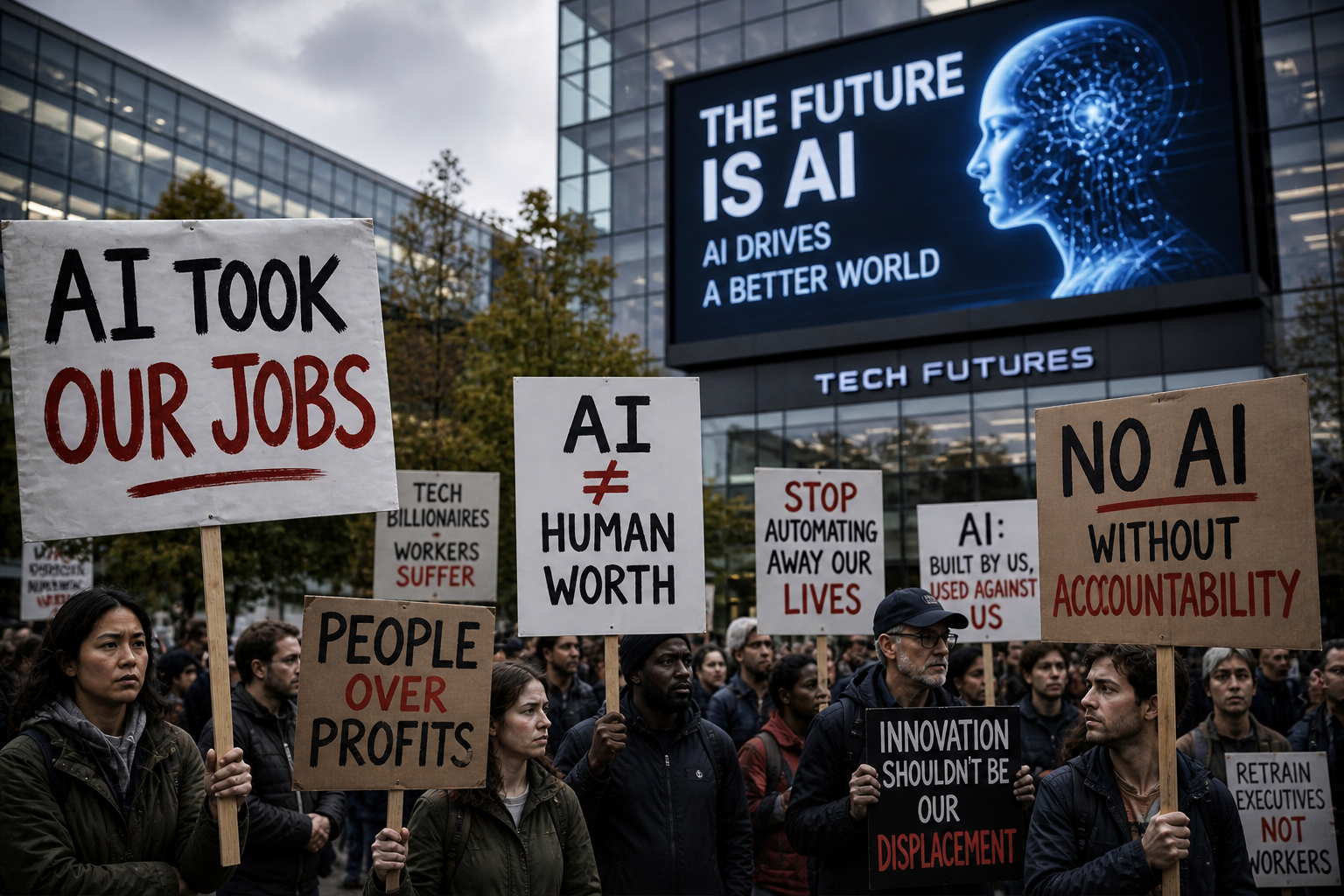
The same week, someone threw a Molotov cocktail at Sam Altman’s San Francisco home.
Within hours, the reaction in AI circles was — and I want to be precise about this — genuine incomprehension. Not that violence had occurred, which everyone condemned. But at the broader social sentiment the incident reflected. “I didn’t realize how bad it was,” one person posted on social media, with a screenshot of an Instagram comment section that had, let’s say, mixed feelings about Altman’s safety.
That incomprehension is the story. Not the Molotov cocktail. The fact that the people building AI didn’t realize how bad it had gotten.
What the Data Actually Says
Let me just lay out the Stanford numbers because they deserve to be read plainly rather than processed through the industry’s tendency to explain away bad feedback.
Among US adults: only 10% say they are more excited than concerned about the increased use of AI in daily life. 50% say it concerns them more than it excites them.
Among AI experts: 56% believe AI will have a positive impact on the US over the next 20 years.
On jobs specifically: 73% of experts say AI will help. 23% of the public agrees.
On medical care: 84% of experts say AI will have a positive impact. 44% of the public agrees.
Gen Z — the generation that actually uses AI the most, with half using it daily or weekly — just saw their excitement drop from 36% to 22% in twelve months. Their anger rose from 22% to 31%. Gallup’s researcher attributed the rising anger specifically to AI “dimming prospects for entry-level workers,” noting that the oldest Gen Z members, those most exposed to the job market, are the angriest.
The Foundation Model Transparency Index — a measure of how much major AI companies disclose about their training data, capabilities, and usage policies — dropped from an average score of 58 to 40 in a single year. The most capable models disclose the least.
This is not a random collection of statistics. It’s a portrait of an industry that has, simultaneously, become more powerful and less accountable, and whose communication with the public it is transforming has deteriorated as its power has grown.
The Two Narratives the Industry Keeps Reaching For
When faced with this kind of data, the AI industry has two default narratives. Both are comfortable. Neither is adequate.
Narrative 1: “The public doesn’t understand AI.” This is the communication problem framing. The gap exists because regular people don’t have access to the technical knowledge that would help them see AI’s potential clearly. The solution is better science communication, more AI literacy programs, more explainers.
This framing is condescending, and it fundamentally misdiagnoses what’s happening. The people most angry about AI are not the people who understand it least. They’re the people experiencing its consequences most directly — entry-level workers in content, software, customer service, and administration who are watching job markets change in real time.
The Dallas Federal Reserve published research in February 2026 showing exactly this pattern: employment for younger workers in AI-exposed occupations is declining, while wages for experienced workers in the same fields are rising. AI is, right now, in the current moment, making the job market significantly harder for people entering their careers. That’s not a misunderstanding. That’s a fact. And people who are experiencing it don’t need better explanations — they need to be taken seriously.
Narrative 2: “New technology always creates fear.” The historical parallel framing. The Luddites feared the mechanised loom. People feared the automobile. People feared the internet. And look how those turned out. This transition will be uncomfortable but ultimately positive. Trust the process.
This framing is also inadequate, for a specific reason that the industry consistently underweights: the pace of AI deployment leaves less time for adjustment than previous technology transitions. There is a real difference between a technology that transforms an industry over thirty years and one that eliminates a job category in eighteen months. The disruption velocity matters. Telling entry-level workers that history says they’ll be fine — while their specific job market is drying up right now — is not reassurance. It’s dismissal.
What the Industry Doesn’t Want to Say Out Loud
The harder thing to admit is that some of the public’s concerns aren’t fears. They’re accurate assessments.
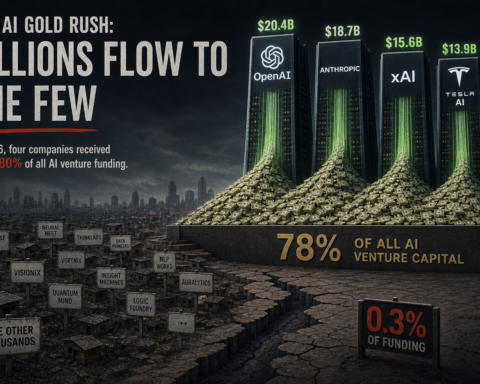
AI is concentrating economic power at an extraordinary rate. In Q1 2026 alone, four companies captured 65% of $300 billion in global venture investment. The four tech hyperscalers are spending $650+ billion on AI infrastructure in a single year. OpenAI is projecting cumulative losses of $115 billion through 2029 while being valued at $852 billion. The economic logic of this sector systematically advantages those who already have capital, compute, and distribution.
AI is making it genuinely harder to get an entry-level job in knowledge work. This is not speculation. It’s what the Dallas Fed found. It’s what Goldman Sachs confirmed. It’s what Gallup documented in Gen Z sentiment data. The people warning about this are not wrong. They’re paying attention.
AI company transparency is declining as AI company power is increasing. The Foundation Model Transparency Index dropping from 58 to 40 in a year — while model capabilities are improving dramatically — means the most powerful AI systems are becoming less explainable, less auditable, and less accountable precisely as they become more consequential.
These aren’t fears. They’re current conditions. And the gap between how AI insiders discuss them (caveat-heavy, future-tense, ultimately optimistic) and how affected people experience them (present-tense, immediate, economic) explains most of that 50-point polling divide.
What Would Actually Help
Here’s my honest opinion, for whatever it’s worth: the industry cannot communicate its way out of a values problem.
The trust gap doesn’t close because Sam Altman gives a more empathetic interview. It doesn’t close because OpenAI publishes a better FAQ about AI and jobs. It doesn’t close because tech leaders express surprise at public anger, then explain why that anger is misdirected.
It closes — if it closes — when the economic benefits of AI are distributed more broadly. When entry-level workers aren’t just told they’ll be fine eventually, but are actively supported through the transitions their industries are currently forcing on them. When AI companies treat transparency not as a PR exercise but as a genuine accountability mechanism.
I’m not making a naive argument that this will happen or that the industry will choose it. Transparency and redistribution run against the natural incentives of companies maximising shareholder returns and maintaining competitive advantages through information asymmetry. These are hard structural problems, not communication failures.
What I am saying is that the industry should at least have the intellectual honesty to stop being surprised at the gap it has helped create. The people throwing Molotov cocktails are symptoms of a problem that was entirely predictable from the data — and entirely ignored by the people who had the most data.
The Stanford 2026 AI Index is 423 pages. The most important sentence in it is this: “AI experts and the US public disagree on nearly everything about AI’s future.”
That’s not a communication problem. It’s a values problem. And the difference matters enormously for what needs to happen next.