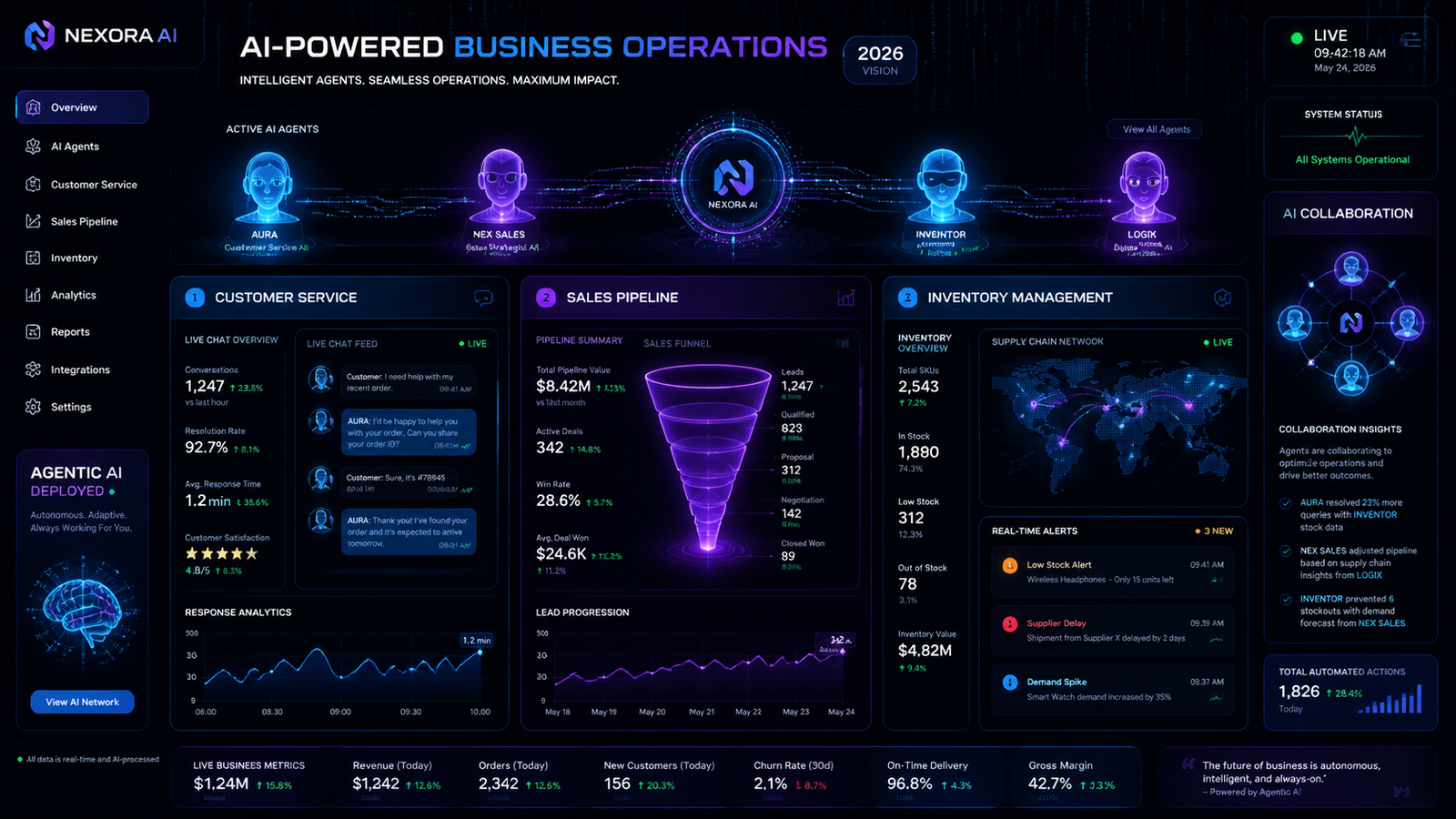
An AI agent is not a smarter chatbot. It’s a system that perceives context, makes decisions, takes actions, and executes workflows — without waiting for you to tell it what to do next. More than 80% of Fortune 500 companies now run them in production. Here’s the honest practical guide to getting one deployed in your business in 2026.
There’s a sentence I’ve been hearing a lot from business leaders in 2026, and it reveals more than it intends to:
“We’re evaluating agentic AI and planning to pilot something this year.”
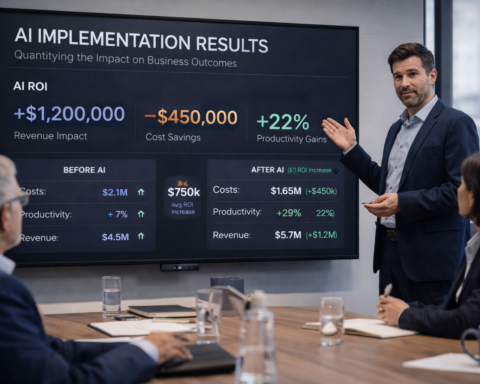
The companies winning with AI agents right now evaluated them last year. More than 80% of Fortune 500 companies are already running AI agents in production — not in a pilot, not in a sandbox, but in live workflows processing real business transactions. Wayfair’s CTO Fiona Tan told Google Cloud: “AI agents can be applied to so many use cases, the number of businesses adopting them should be 100%.” JPMorgan Chase saved 360,000 hours of manual work annually through AI agent automation of operational workflows. Coupa documented 276% ROI from agent implementations across their operations.
The business case is no longer speculative. The question is whether your company will be running agents in production by the end of 2026 — or watching competitors who already are compound their advantage quarter by quarter.
This is the practical guide to getting there.
What an AI Agent Actually Is (Clearly)
The marketing industry has helpfully applied the word “agent” to almost everything involving AI, which has made the term meaningless in a lot of conversations. Let me define what a genuine AI agent is, because the definition determines what business outcomes are possible.
A genuine AI agent has four specific technical capabilities:
Memory: It retains context across interactions and tasks. Not just the current conversation — information from previous sessions, data from earlier in the workflow, context from connected systems.
Tool use: It can access and interact with external systems, APIs, and databases. It doesn’t just generate text; it can read your CRM, write to your project management system, send emails, query your database, and take actions in the software your business actually runs on.
Planning: It can break a complex goal into sub-tasks, sequence them appropriately, and handle dependencies between steps.
Action: It executes outputs with real-world effects. Not “here’s a draft for you to review” but “I’ve updated the record, sent the notification, and created the follow-up task.”
An AI that can generate text but cannot act on the world is not an agent — regardless of how it’s marketed. The distinction is important because the business value of agents comes specifically from autonomous execution across multiple steps and systems. A system that requires human handoff at each step is an improved assistant, not an agent.
The ROI Data That Makes the Business Case
Before the tactical guide, the evidence. These aren’t vendor projections — they’re documented outcomes from deployed implementations.
Google Cloud’s 2026 AI Agent Trends Report, drawing on insights from over 3,466 global executives: 74% of organisations deploying AI agents in production report achieving ROI within the first year. Among those reporting productivity gains, 39% have seen productivity at least double. 88% of early adopters are seeing positive ROI from at least one agentic AI use case.
McKinsey’s research on financial services: banks implementing agentic AI for Know Your Customer and Anti-Money Laundering workflows are realising 200%-2,000% productivity gains. Customer service resolution time reduced by up to 90% with service backlog cut 30%-50%.
Deloitte’s 2026 State of AI in the Enterprise: organisations with ≥40% of AI projects in production expect that percentage to double in six months. Worker access to AI rose 50% in 2025. Twice as many business leaders as last year are reporting transformative business impact, not just efficiency gains.
Average enterprise AI spend hit approximately $7 million in 2025 and is projected to jump 65% to $11.6 million in 2026. The companies allocating that budget to agents are seeing dramatically better returns than those allocating it to point-solution AI tools that don’t coordinate.
NVIDIA’s State of AI report adds the telecom data point: 48% adoption of agentic AI in telecommunications, followed by retail and consumer packaged goods at 47%. These are not experimental categories — they’re industries with high transaction volumes, high customer service loads, and clear economic incentive to automate.
Where to Start: The High-ROI Workflows
The companies wasting money on AI agents are the ones deploying first and asking what problem they solve second. The companies generating 171%+ average ROI (OneReach.ai’s 2026 market data) are doing the opposite: identifying the specific workflow first, then asking whether an agent is the right tool.
The characteristics of a high-ROI agent workflow:
High volume. Agents produce the most economic value when they handle many instances of a workflow — hundreds or thousands per day. A workflow that happens twice a week is probably more efficiently handled by a human who knows it well.
Repetitive but variable. Pure repetition is better served by traditional automation (which is cheaper). The agent advantage is in workflows that follow a pattern but require understanding variable inputs — customer inquiries that vary in specifics but follow consistent logic, data processing that varies in format but produces consistent output, reports that vary in content but follow consistent structure.
Multiple systems. Agent value compounds when the workflow involves pulling data from one system, processing it, and taking action in another. A human doing this manually introduces both time delay and error. An agent can do it continuously, accurately, and at scale.
Clear success criteria. Can you define “did the agent handle this correctly” in a way a non-technical person could evaluate? If the success criteria are fuzzy, governance is impossible.
The workflows meeting these criteria most consistently in 2026 deployments:
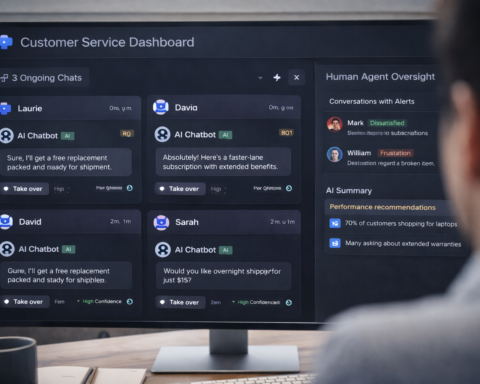
Customer service triage and resolution. Agents receive incoming inquiries, classify by type and urgency, retrieve relevant account data, resolve standard issues autonomously, and escalate complex cases to humans with full context already assembled. McKinsey’s data shows up to 90% reduction in resolution time in well-implemented deployments.
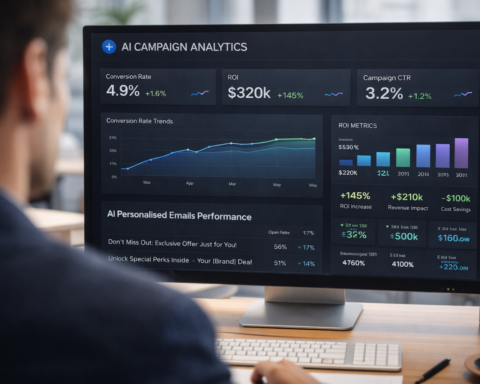
Sales pipeline management. Agents monitor for signals of stalled deals, draft personalised follow-up emails, update CRM records, schedule meetings with interested prospects, and route high-priority opportunities to human attention with supporting research assembled. Companies report conversion rate improvements of 15-25% on agent-managed pipelines.
Operational reporting. Agents compile data from multiple systems on a defined schedule, format it according to templates, distribute it to the right people, and flag anomalies for human attention. A company with 50 knowledge workers saved 200-300 working hours per quarter by automating internal reporting with AI agents.
Invoice and contract processing. Agents extract data from incoming documents, validate against established records, flag discrepancies for human review, and route approved items through approval workflows. Average time from receipt to processing drops from days to minutes.
Lead qualification. Agents score incoming leads against qualification criteria, enrich records with publicly available information, draft personalised outreach, and route qualified leads to human salespeople with context assembled. The human engages at the point where relationship-building matters, not at the point of data processing.
The Deployment Framework That Actually Works
The companies generating the best results from agentic AI deployments share a consistent implementation pattern. It’s not glamorous, but it’s reliable.
Step 1: Map the workflow end-to-end before touching any technology.
Write down every step in the workflow you want to automate. Who does what, with what data, making what decisions, producing what outputs. This takes time and reveals things your team didn’t fully understand about the workflow. That’s the point. An agent will faithfully execute the workflow you design — including the broken parts. Understanding the workflow fully before automating it prevents you from automating dysfunction.
Step 2: Identify the three types of steps.
Once you have the full workflow mapped, categorise each step: Fully automatable (structured, rule-based, clear success criteria), Partially automatable (agent generates, human approves), and Human-required (judgment, relationship, accountability). The agent handles the first category. The second category uses the “human-on-the-loop” model — the agent works continuously within defined parameters, humans review exceptions. The third category is where the agent creates the conditions for better human work.
Step 3: Build the governance model before the agent.
The biggest governance decision is where to place human oversight. Human-in-the-loop (agent pauses, requires explicit human approval before proceeding) is appropriate for high-stakes, irreversible, or newly deployed agents. Human-on-the-loop (agent runs continuously, humans set parameters and review exceptions) is appropriate once the agent’s accuracy is established. Choose before you build. The governance model determines your monitoring architecture, your error response procedures, and your compliance posture.
Step 4: Start with a single workflow at partial deployment.
Not your most impactful workflow. A medium-complexity, medium-stakes workflow where errors are visible, recoverable, and instructive. Run the agent in “draft and review” mode for the first 30 days — it generates outputs, humans approve before actions are taken, you accumulate data on accuracy and failure modes. At 30 days, review the data: what percentage of outputs required modification, what were the failure modes, what parameters would reduce error? Adjust the agent based on what you learned before expanding scope.
Step 5: Measure what matters and expand systematically.
After 90 days of production deployment, the measurement question is: compared to the pre-agent baseline, what changed? Not “how many tasks did the agent complete” but “what happened to the business outcomes the workflow was supposed to support?” If customer service resolution time improved and satisfaction scores held or improved, expand. If time improved but satisfaction declined, investigate whether agent quality is the issue before expanding. One high-value, well-governed agent workflow is worth far more than ten poorly governed workflows that undermine trust and generate exceptions.
The Honest Failure Patterns in Agent Deployment
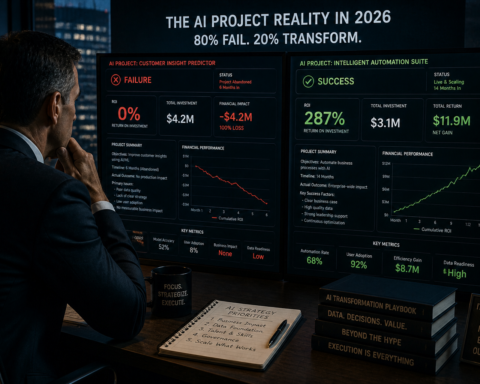
60% of DIY agentic AI initiatives fail to scale past pilot stages, according to available analysis. The failure modes are specific and avoidable.
Deploying an agent before mapping the workflow. Agents faithfully execute what they’re designed to do. If the workflow design is wrong — missing steps, incorrect logic, inappropriate decision criteria — the agent will execute the wrong workflow at scale. This is worse than a human making the same mistake, because the agent does it consistently, at volume, without the adaptive judgment a human would apply.
Insufficient monitoring in the early production phase. Agents make novel error patterns. A human making an error in customer data entry makes familiar errors — transposed numbers, missed fields. An agent making errors may produce outputs that look correct to a casual review but are systematically wrong in ways that take time to detect. The first 60-90 days of production deployment require closer monitoring than most teams budget for.
Confusing the demo with the deployment. An agent that performs beautifully in a demo environment with clean data and simple scenarios will behave differently in your messy production environment with legacy system integrations and edge cases the demo never encountered. Never approve expansion based on demo results. Approve expansion based on production results.
Not defining “success” before deployment. If you deploy an agent and then decide what success looks like, you will always find a narrative that supports the conclusion you need. Define specific metrics, specific baselines, and specific targets before the agent goes live. Then measure against those — not against your post-deployment intuitions.
The Question Every Business Leader Should Be Asking Right Now
Google Cloud’s research offers the clearest frame: “The question for every business leader is not whether AI agents will transform your industry. It is whether you will lead that transformation, or follow it.”
The companies that deploy a single well-chosen agent workflow in Q2 2026, measure it rigorously, and expand it in Q3 will have structural knowledge advantages over their competitors attempting their first deployment in 2027. The learning compounds: deployment experience, error pattern knowledge, governance maturity, employee comfort with agent oversight — all of these accumulate faster when you start earlier.
The barrier to starting is lower than most leaders think. A well-scoped, single-workflow agent deployment targeting a high-volume internal process can be live in four to six weeks with available platform tooling. The governance model is not technically complex. The workflow mapping is time-consuming but not expensive.
The risk of waiting is higher than most leaders think. When 80% of Fortune 500 companies are running agents in production, the companies doing their first pilot next year aren’t catching up — they’re falling further behind.