Runway’s CEO told Semafor he thinks studios should make 50 films for $100M instead of one. The first AI feature film is releasing this spring at $70M — down from an estimated $300M. A production shot 40 locations in a single week without leaving LA. And Hollywood has lost 40,000 jobs since 2022. Both stories are true and both matter.
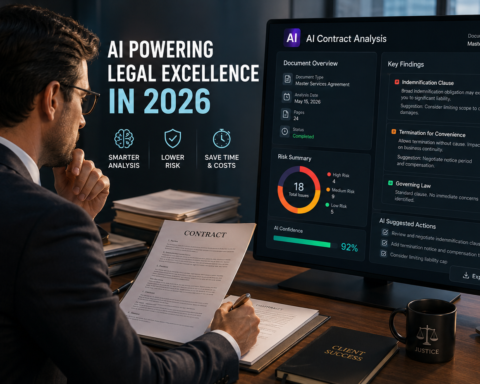
Jon Erwin is a film director who made “House of David” for Amazon Prime Video — a historical drama that needed to show ancient Jerusalem, Bronze Age battlefields, and desert landscapes that don’t exist in modern California. He used AI video generation for the historical scenes. When he came home from that experience, he thought other filmmakers must be doing the same thing.
They weren’t.
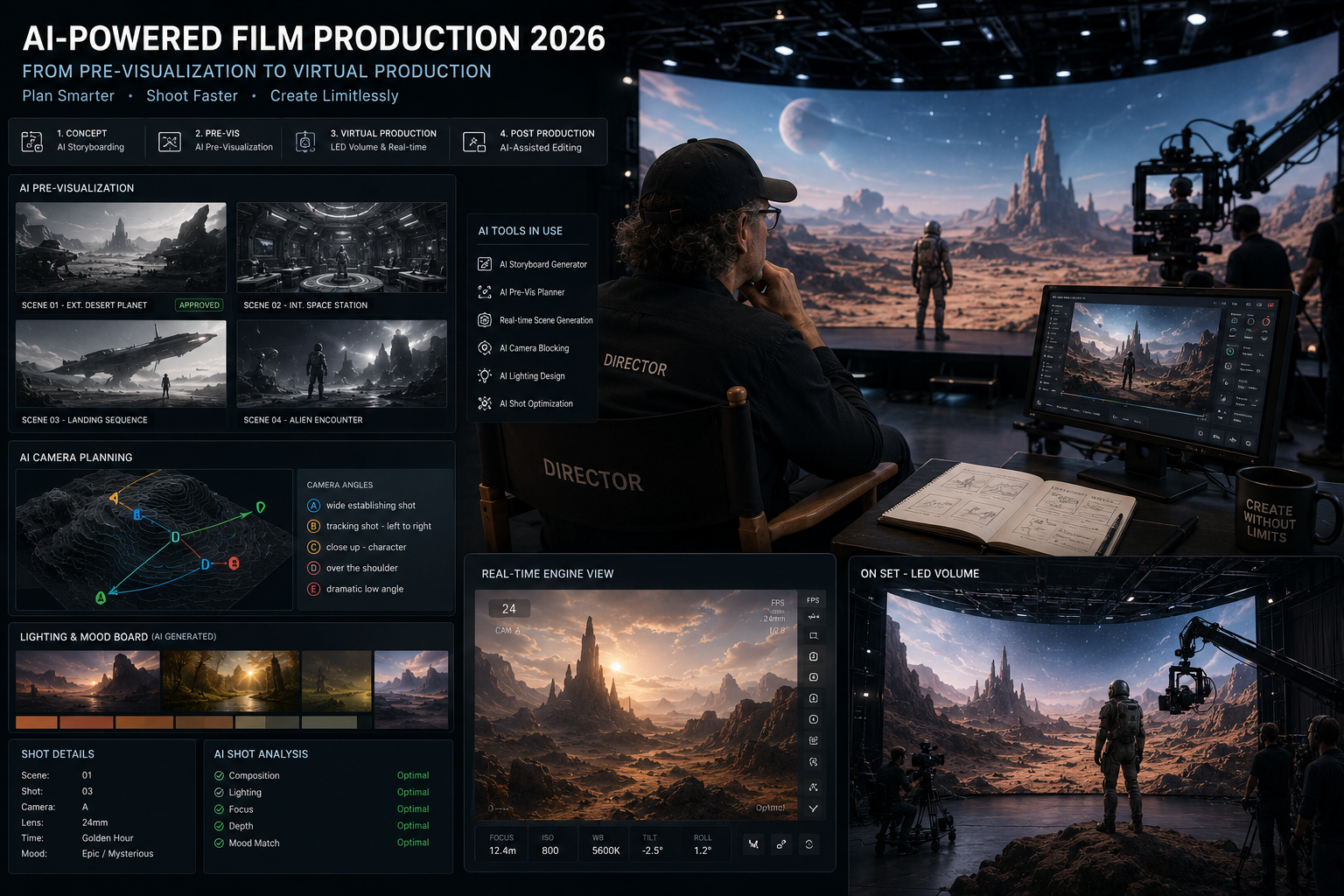
So he started Innovative Dreams, a production services company backed by Amazon Web Services and Luma, that puts AI tools at the centre of every stage of production — pre-production design, virtual set creation, on-set augmentation, and post-production. His first project under the new model: a three-episode series called “The Old Stories: Moses,” starring Ben Kingsley. Shot in a single week on a virtual soundstage in Los Angeles, showing the actors in 40 different locations from around the world. A traditional production would have taken five or six weeks. And there wouldn’t have been budget for 40 locations.
That specific example — one week, 40 locations, Los Angeles soundstage — captures what AI is doing to entertainment production better than any trend piece. Not “AI will transform Hollywood.” AI already transformed this production. The question is what it means for the industry and the people who work in it.
Where AI Is Actually Being Used in Production Right Now
The Hollywood Reporter’s special AI issue frames the current state accurately: “confronted with larger workloads and a shrinking headcount, support staff have folded AI into their workflows, including script development.”
That framing matters. The adoption isn’t happening through dramatic executive announcements. It’s happening through individual people finding tools that help them do their jobs under increasing pressure. And it’s concentrated in specific production stages where AI delivers demonstrable value.
Pre-production — the biggest near-term opportunity. McKinsey’s analysis of the entertainment industry places the greatest near-term AI value in pre-production because that’s where decisions with enormous downstream cost implications are made cheaply. AI-assisted storyboarding, 3D modelling for set design, and camera path planning allow directors and production designers to visualise and test approaches before any money is spent on physical production. “If pre-vis doesn’t yield a clear shot list, it creates more difficulty later,” one AI product leader told McKinsey. “With AI, you can A/B-test shots before you shoot them, saving time on set and enabling more creativity once cameras roll.”
The old adage “fix it in post” is giving way to “fix it in pre” — shifting quality control and creative decision-making to the cheapest possible stage of production. Car chases that used to require closing city streets for two months can be pre-visualised, iterated on, and partially or fully generated. The physical shoot becomes more focused when the creative decisions are made in the AI environment first.
Post-production — already deeply AI-integrated. Visual effects have used machine learning for years. The current generation of tools goes further: de-ageing and de-hazing actors, removing wires and rigs, sky replacement, crowd duplication, colour grading at scale. The VFX work that previously required large specialist teams working for months is increasingly handled by AI-augmented smaller teams in compressed timelines.
Hollywood editors are using AI to match directors’ styles, automate assembly cuts from raw footage, and suggest edit points based on emotional pacing analysis. The assembly cut — the rough first edit that a human editor then shapes — used to take weeks. AI can produce a functional assembly cut in days, giving the human editor more time for the creative work that actually requires their expertise.
Morgan Stanley estimates major media companies could reduce overall programming expenses by approximately 10% and TV and film production companies could see costs fall by as much as 30%. These aren’t projections from AI vendors — they’re estimates from financial analysts assessing the production economics.
The “Bitcoin: Killing Satoshi” benchmark. The first feature film produced with studio-quality AI assistance is arriving this spring. Its production budget was approximately $70 million. The estimated cost without AI: $300 million. That’s a 77% cost reduction on a single production. Even if this number reflects optimal conditions rather than average conditions, the directional signal is significant.
The IP and Legal Battle Running Alongside the Production Revolution
While some corners of Hollywood are enthusiastically adopting AI, other corners are fighting it in court.
Disney and Universal sued Midjourney in June 2025, alleging that their AI image generation models were trained on copyrighted studio IP without permission. The case is ongoing. OpenAI and studios are clashing over copyrights and consent in AI training data. These aren’t marginal disputes — they go to the fundamental question of whether AI companies can use copyrighted creative work to train models without licensing agreements with the rights holders.
The “nutrition label” concept is emerging as a potential framework: disclosure of what training data was used to produce AI outputs, analogous to ingredient labelling on food. Several industry leaders have endorsed this approach as a way to give consumers and clients visibility into whether AI-generated work is built on licensed versus unlicensed content.
Lionsgate partnered with Runway to develop a model trained exclusively on Lionsgate’s own film library — licensed content, not scraped internet content. Imagine Entertainment partnered with Obsidian for similar IP-protected AI development. These partnerships point toward a model where studios develop proprietary AI systems built on their own archives, which both solves the IP problem and creates a competitive advantage — a model trained on decades of a studio’s specific aesthetic and storytelling approach is differentiated from generic video generation.
Adobe’s Firefly Foundry approach embodies the same logic: commercial-safe, IP-protected models trained for specific IP owners. As Adobe’s leader told McKinsey, “You don’t need a model that works for everyone” — you need a model that works safely and distinctively for your specific creative property.
The Employment Reality Nobody Is Presenting Honestly
Here’s where the honest assessment requires holding two difficult things at once.
Hollywood has lost over 40,000 entertainment industry jobs since 2022. Production activity in Los Angeles has sunk to its lowest level since 1995. The COVID production halt, the 2023 writers’ and actors’ guild strikes, and now AI-driven efficiency changes are compounding effects that are devastating communities that depended on below-the-line production work — costumers, set designers, makeup artists, location scouts, production assistants.
These job losses are real and they’re happening now, and they would be happening without AI because of streaming consolidation, production cost pressure, and runaway production to other regions. AI is accelerating specific elements of this disruption, particularly in visual effects, stock footage replacement, and post-production labour.
At the same time, the production capabilities that AI enables genuinely expand what can be made. Innovative Dreams’ one-week, 40-location shoot creates content that wouldn’t have existed at all without AI — the budget for the traditional version simply wasn’t there. Runway’s CEO Cristóbal Valenzuela argues that $100M should fund 50 films at current AI capability rather than one, creating more opportunities for more stories and more storytellers. The creative democratisation argument — that AI removes technical and financial barriers that previously limited who could tell stories — is genuine.
Both of these things are true simultaneously: specific categories of production employment are being compressed while creative possibilities are expanding. What this means for the communities and workers most affected by the compression is a policy and social question, not a technology question. AI doesn’t resolve it.
What the guilds — WGA, DGA, SAG-AFTRA, IATSE — have established through their contract negotiations is important: AI should augment roles, not replace them, and studios cannot use AI-generated performances or writing without consent and compensation. These provisions don’t stop the evolution, but they create a floor that the most rapid and predatory deployments have to respect.
The Consumer Side: What Personalisation Means for Streaming
The production story is the most visible part of AI in entertainment. The personalisation story is the part with the most direct daily impact on the hundreds of millions of people who use streaming services.
Recommendation algorithms on Netflix, Amazon Prime, Disney+, and every major platform are AI systems. They’ve been AI systems for years. The current generation is more sophisticated — incorporating not just what you’ve watched but how you watched it (did you pause? replay? abandon after 10 minutes?), time of day, device type, and social viewing patterns.
The economic stakes are enormous. A 1% improvement in recommendation accuracy translates into measurable retention improvement on a platform with hundreds of millions of subscribers. Content that gets served to the right audience at the right time generates both the direct revenue from that view and the subscriber retention that comes from the platform feeling relevant to that person’s tastes.
AI is also being used for personalised content localisation — dubbing and subtitling at scale with AI voice technology that preserves tone and nuance. What previously required expensive human dubbing for each language market can now be produced more quickly and cheaply, expanding the addressable market for international content without proportional production cost increases.
Morgan Stanley’s analysis makes a point worth taking seriously: because AI changes how we communicate digitally, it may cause consumers to treasure in-person, communal experiences more. The AI-mediated content landscape might paradoxically drive demand for live events, theatrical experiences, and the irreplicably human performances that AI cannot generate. The authenticity premium — the specific value of knowing something was made by a specific human for a specific reason — may increase as AI-generated content becomes ubiquitous.